Best Probiotics for IBS-D: Top 3 Evidence-Based Strains
Top 3 Probiotic Strains for IBS-D and How Much to Take Daily
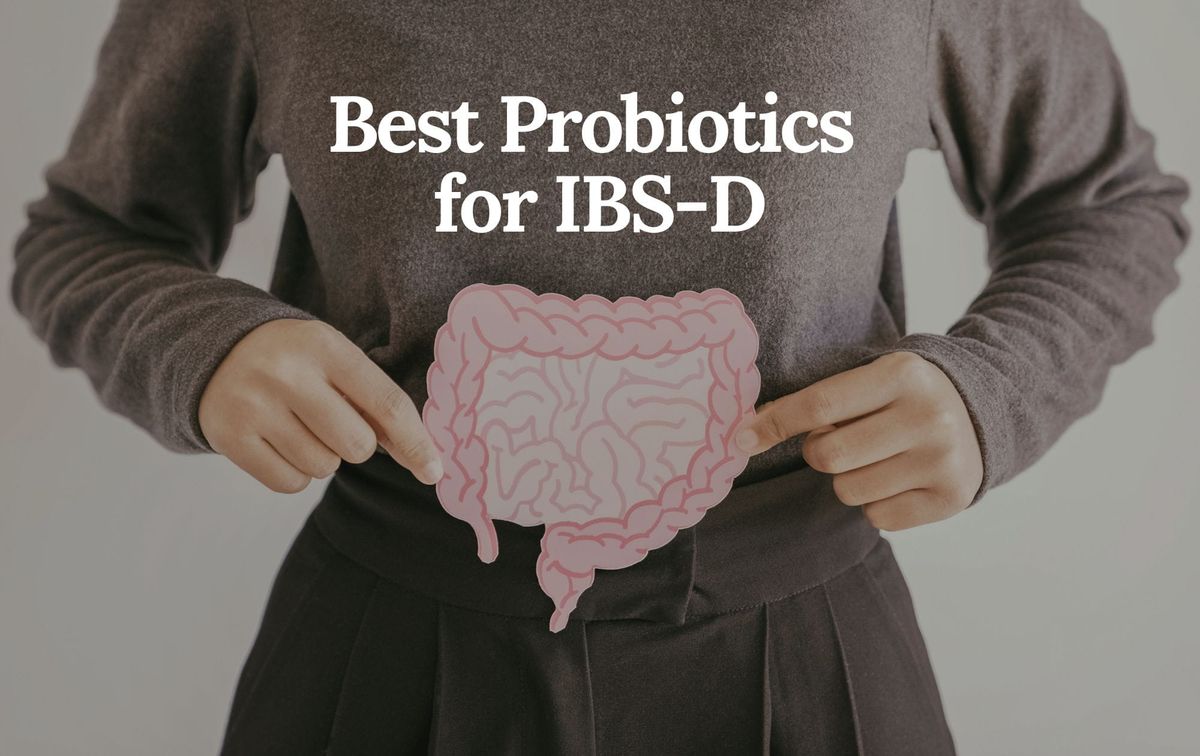
People with IBS sometimes "joke" about which is worse: constipation or diarrhea. Constipation can leave you feeling heavy, sluggish and uncomfortable, while diarrhea can make every trip outside the house revolve around knowing where the nearest toilet is.
Probiotics seem to work fairly quickly for IBS-D, but only if you use the right strains.
Top 3 Probiotic Strains for IBS-D and How Much to Take Daily
When it comes to probiotics for IBS-D, the strain often matters just as much as the quantity (measured in daily CFU).
Some experts say you should take large amounts, meaning up to 200 billion per day, but the specific studies mentioned below used more affordable doses.
But still, if you don’t get the desired results, you may need more than what supplements provide in one or two capsules a day.
Clostridium butyricum CBM588 for IBS-D
This one may seem surprising, because the supplement companies tends to focus on Lactobacillus and Bifidobacterium, while Clostridium is typically associated with the “bad guy” C. difficile, which can make people very ill.
What does the study say?
The probiotic intervention resulted in a reduction in diarrhea episodes by more than 80%, a 60% decrease in evacuation frequency, and a 30% improvement in Bristol Stool Scale scores. Additionally, abdominal pain decreased by 60%; bloating by over 50%; and dissatisfaction with bowel habits and interference with daily life improved by approximately 50% and 60%, respectively. Overall, IBS severity and quality of life improved by more than 50%. These findings were further validated through principal component analysis (PCA), confirming the robustness of the observed effects.
The results are quite remarkable, showing clear improvements across nearly every area that matters most to people living with IBS-D.
Daily Dose: 3 tablets (1.35 million CFU per day)
Each tablet: 4.5 x 10^5 CFU (450,000 CFU)
Taken during or shortly after breakfast, for a total of 8 weeks.
Keep in mind that we're talking about millions here, not the billions of CFU typically found in probiotic supplements.
Bacillus coagulans MTCC 5856
This is another interesting strain. B. coagulans is not as widely used in probiotic supplements as Lactobacillus and Bifidobacterium, but it has been attracting some attention in recent years.
Daily Dose: 2 billion CFU
Taken for 3 months.
The study concluded that the B. coagulans MTCC 5856 at a dose of 2 × 10(9) cfu/day along with standard care of treatment was found to be safe and effective in diarrhea predominant IBS patients for 90 days of supplementation. Hence, B. coagulans MTCC 5856 could be a potential agent in the management of diarrhea predominant IBS patients.
Saccharomyces cerevisiae CNCM I-3856 for IBS-D
Saccharomyces cerevisiae is probably the least suprising of the top 3 probiotics for IBS-D, because it is frequently mentioned in articles, videos and discussions about digestive health.
Here's what the study says:
Four probiotic strains and a mixture were significantly superior to placebo in reducing the bowel movement frequency in diarrhea-predominant IBS (IBS-D). Bacillus coagulans MTCC 5856 (SUCRA, 99.6%) and Saccharomyces cerevisiae CNCM I-3856 (SUCRA, 89.7%) were among the most effective probiotics for improving the Bristol stool form scale of IBS-D.
Another study also found Saccharomyces cerevisiae CNCM I-3856 effective for IBS. What's interesting is that the improvements were seen in all IBS subtypes, including IBS-D, IBS-C, and IBS-M.
Daily Dose: 2 billion CFU twice daily (4 billion CFU per day)
Taken for 2 months.
The Bottom Line
Clostridium butyricum CBM588, Bacillus coagulans MTCC 5856 and Saccharomyces cerevisiae CNCM I-3856 stand out as well-studied strains with evidence supporting their use in IBS-D.