Butyrate for SIBO and IBS
We often focus on probiotics, prebiotics, and fibre when talking about gut health, but they're not the whole story. Our grandmothers may have had a point about butter, and today butyrate supplements are an interesting option for SIBO and IBS.
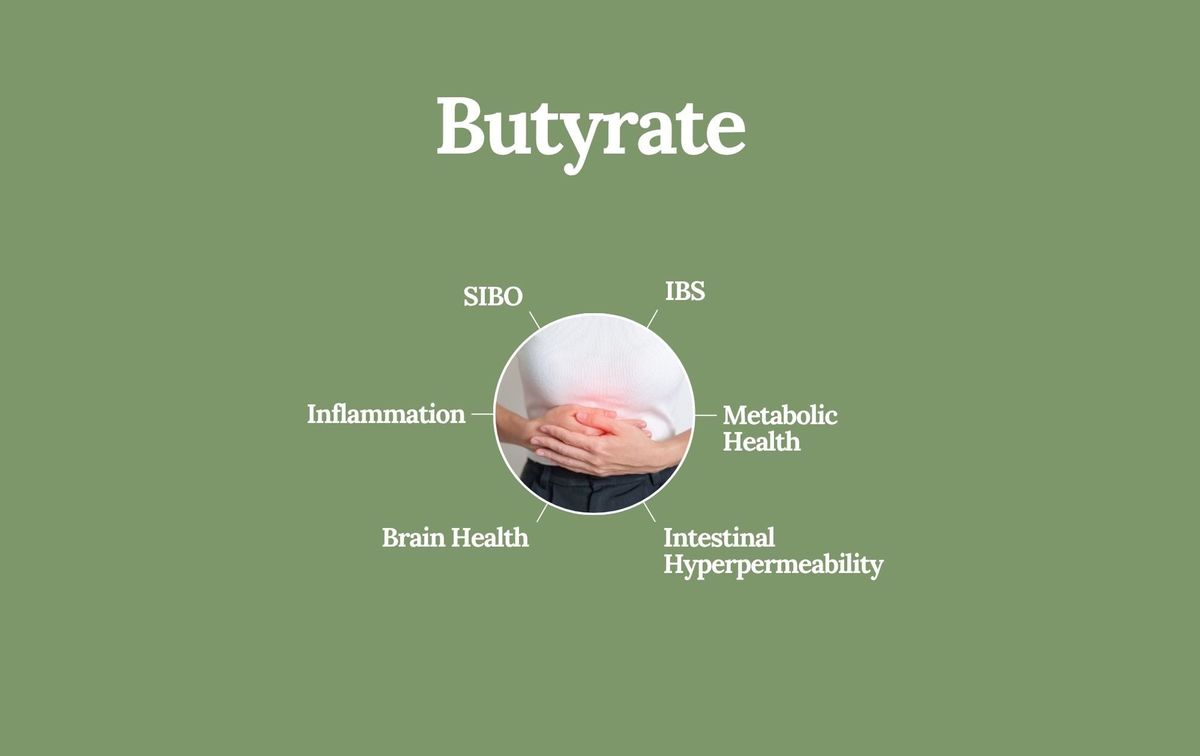
I still clearly remember the first time I used butyrate, years ago. Why? Because at the time, it was the only supplement that genuinely felt soothing to my gut.
Back then, I knew very little about the gut microbiota, and I probably bought it because of an ad I saw in a magazine.
Unfortunately, I was impatient, and despite how good it felt, I didn't stick with it for very long, which is a shame.
I was surprised years later when I learned that butyrate may be useful for SIBO and IBS. In my mind, it was simply a postbiotic for gut lining repair rather than something that could help with bacterial overgrowth.
Sodium butyrate for SIBO
In this study, researchers found that giving patients with type 2 diabetes and IBS 1.5 g of sodium butyrate per day for 12 weeks reduced excessive bacterial fermentation in the small intestine.
Here's the key takeaway from the paper:
Our study demonstrated that sodium butyrate effectively alleviated gastrointestinal symptoms and improved carbohydrate metabolism. Notably, this trial demonstrated a direct reduction in lactulose hydrogen breath test results incidence with sodium butyrate supplementation.
Butyrate for IBS
Another study looked at 3,000 patients with IBS who took 150 mg of sodium butyrate twice daily for 12 weeks.
The strongest effect was seen in adbominal pain, but other IBS symptoms improved too, from bloating and diarrhea to nausea and vomiting.
As a result, almost 94% of participants said they would continue taking sodium butyrate.
People with IBS whose main symptom is pain during bowel movements may also find this study interesting. After 4 weeks of taking sodium butyrate, pain improved, and by 12 weeks, participants also reported better bowel habits and less urgency.
The Bottom Line
For some people with IBS and SIBO, probiotics can be difficult to tolerate. If bacterial overgrowth is already an issue, adding more bacteria can backfire. Butyrate is different, because it's a postbiotic, not a live microorganism.
Sodium butyrate seems to be the most common form used in supplements, but I've noticed that some people swear by tributyrin, because it may be better at getting butyrate to the colon.
The tricky thing with sodium butyrate is that supplement recommendations are usually given in milligrams per day, but the dose used in the SIBO study mentioned above was 1.5 g per day. That can mean taking quite a few capsules daily.
When choosing a butyrate supplement, always check the label. The same thing happens here as with magnesium. For example, a product may list 500 mg of sodium butyrate, but the actual amount of butyric acid may be 400 mg.