How to Make a High-Potency Probiotic at Home?
Did you know you can grow probiotic bacteria at home by fermenting certain foods with specific strains and make a probiotic with a much higher bacterial count than a capsule?
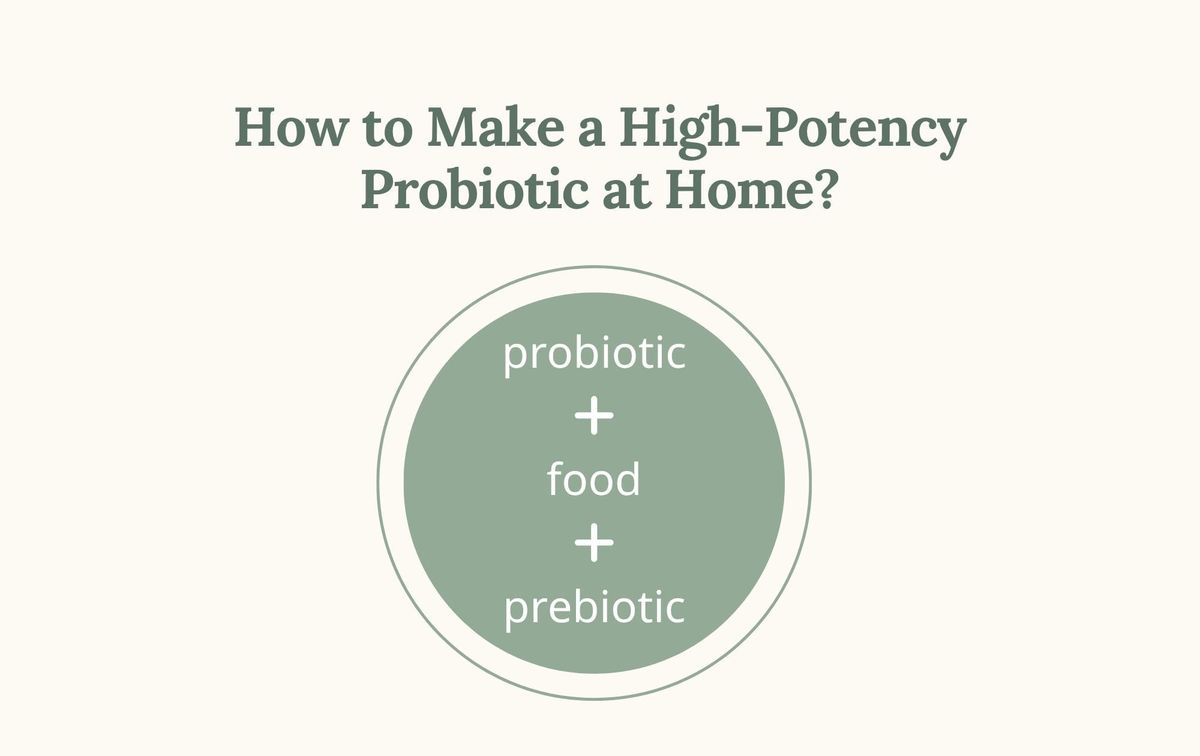
In a nutshell: to make a powerful targeted probiotic at home, you need probiotics capsules with a strain that has been shown to help with your specific condition, something to grow it in, prebiotic fibre in powder form and a device that can hold a steady temperature for a few days, such as a yogurt maker.
I was surprised to learn that you can not only increase the bacterial count from probiotic capsules, but also use foods other than dairy and coconut milk to make high-potency probiotics at home.
This article focuses on those foods, because I understand that many people avoid dairy and want other options.
This article is based on the research and ideas presented by Dr. William Davis in his book: Super Gut: A Four-Week Plan to Reprogram Your Microbiome, Restore Health, and Lose Weight.
Best Foods for Growing Probiotics
To get the most out of every capsule and produce a high-count probiotic you need food to grow your specific strain in.
Most people will probably think of dairy first, but it is not the only option.
Dairy
Traditionally, milk has been fermented to produce all kinds of foods such as yoghurt and kefir.
However, getting a smooth, appetizing texture at home with milk might be a challenge, especially when you are using non-yoghurt cultures.
And kefir separates into curds and whey anyway.
I make my SIBO probiotic with single cream, following Dr. William Davis’ advice, and it turns out perfectly smooth.
Single cream is roughly equivalent to half-and-half or an 18% fat cream.
Coconut Milk
Coconut milk is another food you can use to make a powerful probiotic at home.
It’s rich, creamy and dairy-free.
This is what Dr. William Davis says about fermenting coconut milk in his book Super Gut: A Four-Week Plan to Reprogram Your Microbiome, Restore Health, and Lose Weight:
Choose a tinned coconut milk (never the thinner products in cartons) that contains nothing but coconut and water, with no thickeners or mixing agents such as xanthan gum or gellan gum—guar gum is okay, however—because these additives provoke separation upon fermentation.
Coconut Water
I wrote a separate article about fermenting and choosing the right strains to make a refreshing, gut-friendly summer drink:
Fermented Coconut Water [Your Probiotic Guide]
Pureed Fruits
This is a delicious alternative to dairy, especially for people who avoid fruit because of its sugar content.
You can now eat bananas, mangoes, peaches, raspberries, strawberries or blueberries as a high-potency probiotic.
According to Dr. William Davis pureed fruits require a 72-hour fermentation with your selected probiotic strain.
Hummus and Salsa Verde
Now this one is surprising. It would have never occurred to me to ferment hummus or salsa, especially since I find chickpeas hard to digest, but it may work for some people.
Here is what Dr. William Davis suggests:
I find it necessary to dilute hummus by half with water before fermentation: add 125 ml of water for every 250 g of hummus. Ferment for 48 hours. Follow the same temperature settings used in the dairy-based recipes, which vary with the microbe you choose.
The Bottom Line
I used both single cream and pureed raspberries to make powerful, targeted probiotics at home, and the fruit version with L. gasseri gives me the most noticeable benefits and seems to suit my body best.
READ MORE
Fermented Coconut Water [Your Probiotic Guide]
1 Source
Dr. William Davis Super Gut: A Four-Week Plan to Reprogram Your Microbiome, Restore Health, and Lose Weight. Yellow Kite, 2022. Kindle Edition.