Which is Better: Milk Kefir or Water Kefir?
Traditional or dairy-free? Which kefir is better for gut health? Which one contains more live microorganisms (probiotics) and tastes better?
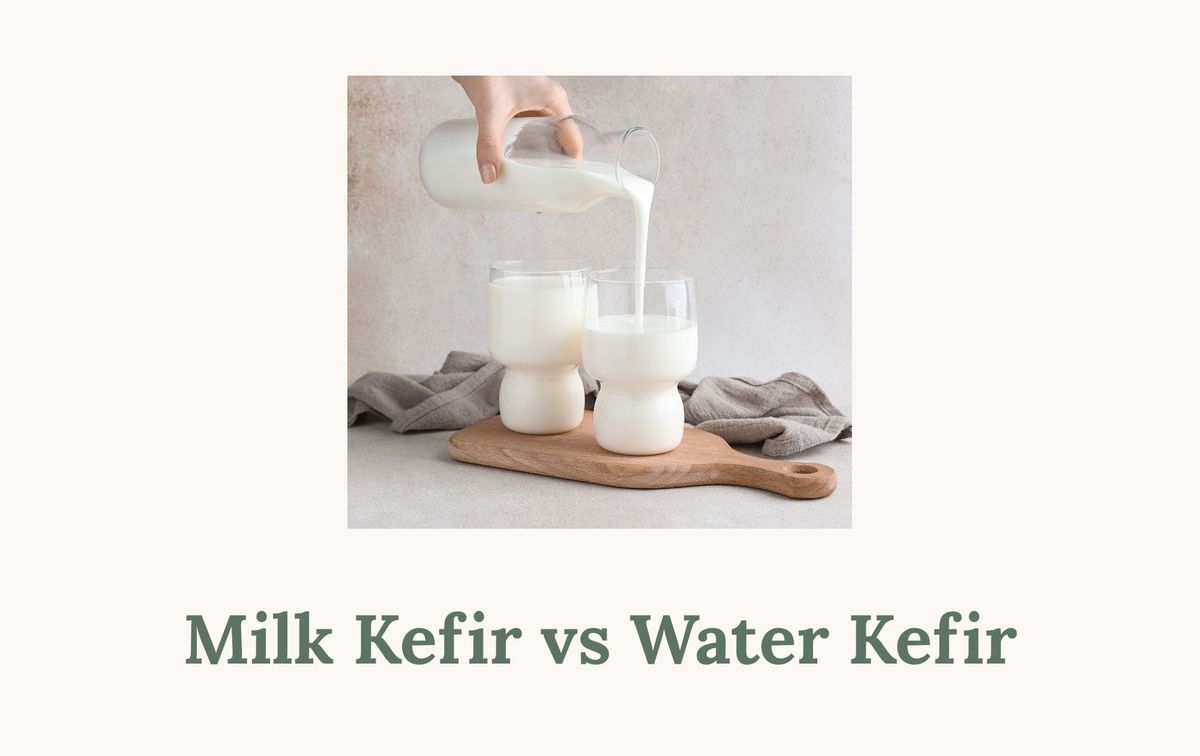
If you’ve been wondering which is healthier, water or milk kefir, this article will answer that question from a scientific point of view.
Most online discussions focus on taste, texture, and which kefir is less hassle to make at home. But if your goal is improving gut health, which one should you choose?
Which Has More Probiotics: Milk Kefir or Water Kefir?
People who don’t live in countries where fermented foods are traditionally part of the everyday diet, often don’t drink kefir, because they like the taste. In fact, they find it too sour or even off-putting, because it is not something they grew up with.
They drink it for gut health, which is why the question about probiotic amounts comes up.
Which one is more worth the hassle?
Please note that kefir is a mix of probiotic microorganisms, including bacteria and yeasts.
Milk kefir
Per 1 ml: 100 million live microorganisms
Per glass (250 ml): 25 billion live microorganism
Water kefir
Per 1 ml: 1 million live microorganisms
Per Glass: (250 ml): 250 million live microorganisms
Milk kefir contains roughly 100 times more beneficial bacteria and yeasts per serving than water kefir. The difference is striking.
Which is easier to make at home?
I have read numerous Reddit threads about making kefir and it seems to be a matter of preference. Some people say water kefir is easier to make at home, because they don’t like the texture of milk kefir and prefer a perfectly smooth yoghurt-like result. I accept that kefir is lumpy - that is just how it is.
To be honest, making traditional milk kefir couldn't be much simpler. You leave raw milk in a warm place to ferment, and that's pretty much it. Making a cup of tea arguably takes more effort.
Water kefir, on the other hand, requires a few more ingredients, including water kefir grains and sugar.
Fermentation Time and Temperature
Milk Kefir
Best temperature: 20 °C (68 °F)
Fermentation time: 24 hours
Water Kefir
Best temperature: 20-25 °C (68-77 °F)
Fermentation time: 24-72 hours
Taste and Texture: Milk Kefir vs. Water Kefir
Milk kefir doesn’t look particularly appetizing on its own. You are unlikely to have people ask, “Can I have a glass of that?” It is a traditional food with a distinctive texture and taste.
Water kefir is more party-friendly. It’s light and fizzy, and some people compare it to soda, kombucha or lemonade.
Which is better: Milk Kefir or Water Kefir
There seems to be more research on milk kefir because it has been around for centuries.
Water kefir has gained popularity more recently as people have become more interested in dairy-free fermented foods.
However, research suggests that water kefir, although it has lower bacterial counts, may still be beneficial for insulin sensitivity, allergy support, and as an anti-inflammatory food.
Water kefir may inhibit the growth of certain pathogenic microorganisms and food spoilage bacteria, resulting in various health-promoting properties, including immunomodulatory, antihypertensive, anti-inflammatory, anti-ulcerogenic, antiobesity, hypolipidemic, and hepatoprotective activities.